

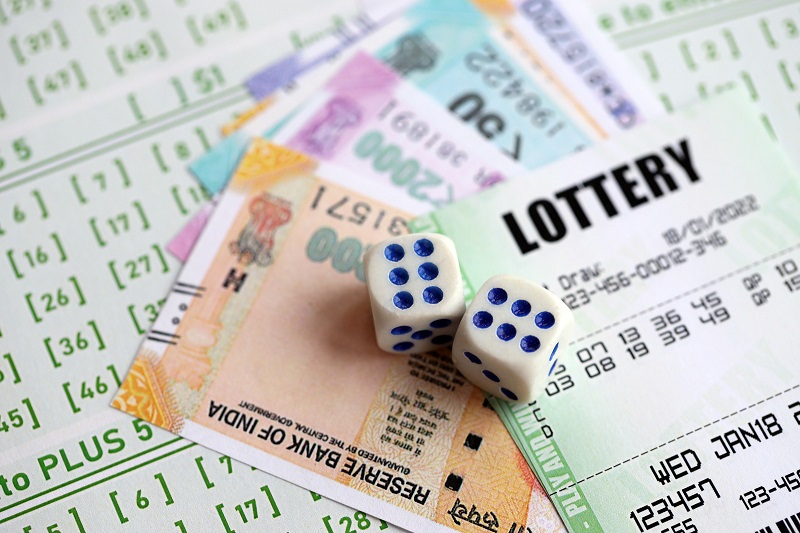
Across convenience store checkout counters and digital lottery forums, players spend hours scrutinizing historical frequency charts. They track “hot” numbers on perceived winning streaks, hunt for neglected “cold” numbers overdue for a turn, and design intricate charting systems based on months of archived draws. It is an elaborate, ritualized effort to uncover hidden structure inside chaos. Yet in probability theory and mechanical engineering, every dollar spent on historical tracking rests on a fundamental misunderstanding of how random systems operate. Past lottery results have zero predictive authority over what happens in the next drawing.
Treating lottery balls like athletes on a winning streak or stocks rebounding after a dip creates an illusion of control. To understand why historical data cannot crack the lottery code, one must examine the mathematics of independent events, the psychological traps of human pattern recognition, and the rigorous engineering designed to keep lottery drawings unpredictable.
The Mathematics of Independent Events: Every Draw Has Zero Memory
The cornerstone of lottery probability is the concept of independent events. In a mathematically independent system, the outcome of any single trial has no influence on the outcome of future trials.
Consider a standard coin toss. If a fair coin lands on heads five times in a row, the odds of it landing on heads on the sixth toss remain precisely 50 percent. The coin possesses no consciousness, no mechanical memory, and no internal mechanism nudging it toward tails to balance the ledger.
Major lotteries function on this exact principle, magnified across a larger pool of numbers. When a multi-state lottery draws five white balls from a drum of 69, the mechanical system resets entirely before the next drawing. The balls are placed back in their racks, the chamber is re-sealed, and the physics begin from a fresh baseline. The combination 1-2-3-4-5-6 has the exact same mathematical probability of being selected as any scattered sequence of digits, and a number drawn on Wednesday has precisely the same mathematical likelihood of appearing on Saturday as a number that has not surfaced in six months.
The Gambler’s Fallacy and the Illusion of “Due” Numbers
The belief that past results influence future draws is the classic definition of the Gambler’s Fallacy. This cognitive trap manifests in two opposing strategies:
-
Hunting for cold numbers: Players assume that because a specific number has appeared less frequently than average over the past fifty drawings, nature must intervene to correct the deficit. They believe that number is “due” for a selection.
-
Chasing hot numbers: Conversely, some players believe that recently drawn numbers have entered an active streak, assuming that mechanical biases or cosmic momentum make them more likely to repeat.
Both perspectives fail because they confuse micro-level events with macro-level distributions. Probability dictates that if a lottery runs for billions of iterations, every number will appear with approximately equal frequency. However, this balance occurs through dilution across time, not through active compensation. If the number 14 fails to appear for a year, the universe does not force the number 14 to appear three times next month to even the score. Over an infinite timeline, that early dry spell simply becomes an invisible rounding error in a massive ocean of data.
The Misapplication of the Law of Large Numbers
Many system designers misquote the Law of Large Numbers to justify their predictive models. In statistics, this law states that as a sample size grows toward infinity, the observed experimental results will converge toward the expected mathematical theoretical probability.
Crucially, the law applies exclusively to large aggregated data sets, not to the next immediate sample. Expecting a small sample of fifty or one hundred weekly drawings to distribute evenly across sixty or seventy possible numbers is a mathematical error. Short-term variance regularly produces clusters, droughts, and apparent anomalies that look meaningful on a spreadsheet but represent nothing more than normal random noise.
Physical Machinery and Certified Randomness
Beyond theoretical mathematics, the physical hardware of modern lotteries is deliberately engineered to eliminate predictability. Lottery corporations implement multi-layered physical and operational security measures to prevent patterns from emerging:
-
Precision-calibrated balls: The rubber or foam balls used in mechanical gravity-pick and air-mix machines are inspected with laser micrometers and analytical scales. Each ball within a set must match the exact mass, diameter, density, and elasticity of every other ball to within fractions of a milligram.
-
Multi-set rotation: State lottery commissions keep multiple identical ball sets and multiple draw machines in secure, temperature-controlled vaults. Random selection protocols dictate which machine and ball set will be paired for a given drawing, often determined minutes before the broadcast under the observation of independent auditing firms.
-
True random number generation: For electronic digital draws, operators utilize certified hardware random number generators (TRNGs). Unlike software algorithms that rely on predictable mathematical formulas, hardware generators pull entropy from unpredictable physical phenomena, such as atmospheric radio noise or thermal fluctuations in semiconductors.
Every layer of this operational architecture exists for one purpose: to ensure that the physical conditions of one drawing cannot carry over into the next.
Cognitive Wiring: Why Our Brains Seek Patterns in Noise
If the mathematics and mechanics so definitively disprove the validity of past results, why do lottery tracking systems remain so popular? The answer lies in human evolutionary biology.
The human brain is an advanced pattern-recognition machine. Our ancestors survived by detecting meaningful correlations in nature: associating a specific rustle in the tall grass with an approaching predator, or noticing that seasonal weather changes coincided with river migrations. This evolutionary adaptation, known as apophenia, causes people to perceive meaningful connections and intentional order inside completely random information.
When an individual looks at a lottery grid and sees three consecutive numbers or notices that number 22 has appeared three drawings in a row, the brain registers that cluster as a signal. In reality, random distributions are characterized by uneven clumps. A dataset where numbers appeared with rigid, uniform separation would actually be evidence of non-random manipulation. True randomness looks messy, unpredictable, and counterintuitive to the human mind.
The Flawed Economics of Prediction Software and Wheeling
The market is saturated with books, proprietary software, and so-called “wheeling systems” promising to increase a player’s odds of taking home a jackpot. These programs ingest historical draw archives, apply complex mathematical filters, and output “optimized” ticket selections.
While wheeling systems can mathematically guarantee lower-tier prize payouts if a player correctly guesses the broader pool of numbers, no software can assist in selecting that winning pool in the first place. Historical regression analysis, moving averages, and machine learning models are powerful tools for evaluating financial markets or weather patterns where underlying physical drivers and feedback loops exist. When applied to an independent lottery draw, those same tools are analyzing white noise. You cannot forecast a future outcome from historical data when the system generating that data completely purges its state between trials.
Strategic Selection: Protecting Payout Value Instead of Odds
While mathematics proves that you cannot improve your odds of matching the winning numbers, you can use mathematical principles to optimize your expected payout value if you happen to win.
Most lottery participants select their numbers based on human habits: birthdays, wedding anniversaries, lucky numbers, and symmetrical patterns drawn across the physical play slip. Because months have 31 days, numbers between 1 and 31 are selected far more frequently than numbers from 32 to 69.
If a drawing yields exclusively low numbers, the likelihood of multiple players sharing the top prize increases dramatically. By selecting combinations that avoid obvious calendar dates, arithmetic sequences, or visual lines on the slip, you do not improve your chance of winning, but you significantly reduce the odds of splitting the jackpot with several other winners.
Tracking historical draw numbers provides harmless entertainment and personal ritual for casual players, but treating those archives as a roadmap to future drawings is a mathematical impossibility. In every drawing, the balls drop into the chamber with no past, no memory, and no agenda. Understanding that reality strips away false hopes and allows players to approach the game for what it truly is: an exercise in pure, unalterable chance.
Meta Title: Lottery Number Patterns: Why Past Results Cannot Predict Draws
Meta Description: Learn why lottery number patterns and past results cannot predict future draws, exploring independent probability, the Gambler’s Fallacy, and randomness.